Fixed teeth vs removable dentures: which is better?
Fixed teeth vs removable dentures: which is better?
There is no single best choice for every missing tooth. A fixed bridge, conventional removable denture, implant-retained overdenture or implant-supported fixed bridge each has different requirements for health, bone, cleaning, cost and maintenance. The right option depends on which teeth are missing, the condition of the remaining teeth and gums, your bite, medical history, dexterity and personal preferences.
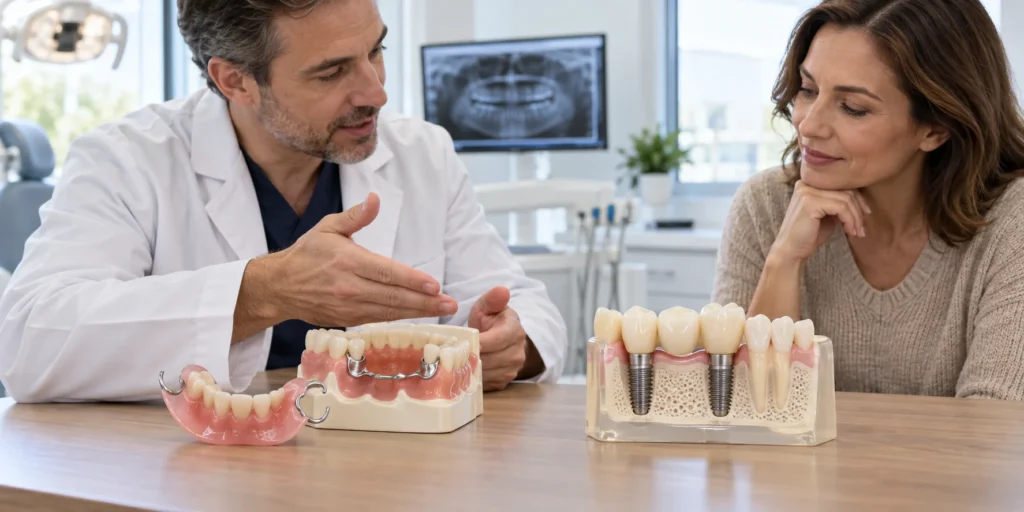
“Fixed teeth” can refer to a bridge supported by natural teeth or to a prosthesis supported by implants. A denture may be partial or full, and some removable dentures attach to implants for additional retention. Comparing names alone can be confusing, so this guide explains the main differences and the questions to ask at an assessment.
What are the main tooth replacement options?
- Fixed tooth-supported bridge: one or more replacement teeth joined to crowns on neighbouring teeth. The patient does not remove it for daily cleaning.
- Removable partial denture: replaces some missing teeth and is taken out for cleaning; it may be supported by remaining teeth and gum tissue.
- Complete denture: replaces all teeth in an upper or lower jaw and rests on the oral tissues.
- Implant-retained overdenture: a removable denture attaches to implants and is taken out for cleaning.
- Implant-supported fixed bridge: a bridge is secured to implants and is usually removed only by a dental professional for maintenance.
The NHS guide to dentures describes complete and partial dentures and identifies bridges and implants as alternatives. An implant is not a tooth by itself; it is a support for a crown, bridge or denture. Some people may also choose not to replace a missing tooth immediately, depending on the location, function and advice of their dentist.
Comparison at a glance
| Feature | Fixed bridge | Removable denture | Implant-retained option |
|---|---|---|---|
| Removal | Usually removed only by a clinician. | Patient removes it for daily cleaning. | May be removable or fixed, depending on design. |
| Support | Natural teeth next to the gap. | Gums, remaining teeth, or a combination. | Implants support a crown, bridge or overdenture. |
| Cleaning | Needs cleaning around the bridge and beneath it. | Can be removed and cleaned directly; gums and remaining teeth also need care. | Depends on whether the prosthesis is removable or fixed. |
| Typical planning needs | Assessment of supporting teeth and bite. | Assessment of tissue support, fit and remaining teeth. | Bone, health, surgical suitability and maintenance access. |
| Ongoing care | Check the bridge, supporting teeth and gum health. | Clean daily and adjust or replace if fit changes. | Clean around implant components and attend professional reviews. |
Comfort, chewing and speech
A fixed bridge may feel more like a continuous part of the mouth once the patient adapts, but it still requires care around the artificial tooth and supporting teeth. A removable denture can restore appearance and chewing, but may move or press on the gums, particularly while the mouth is adapting or if the fit changes. An implant-retained denture may improve retention for some patients, although it remains removable and attachments may need maintenance. No option guarantees the same sensation as natural teeth.
New dentures can take time to get used to. Speaking and eating may feel unfamiliar at first, and the clinician may need to adjust sore areas or pressure points. The NHS notes that adaptation can take a few weeks and that softer foods may help initially. If a denture clicks, slips, causes pain or makes chewing difficult after the adjustment period, arrange a review rather than relying on adhesive to mask a fit problem.
How do remaining teeth and bone affect suitability?
A tooth-supported bridge uses adjacent teeth as anchors. If those teeth already need crowns, this may fit the overall plan; if they are healthy, preparing them removes tooth structure and should be weighed against alternatives. A removable partial denture may replace several teeth without surgery, but its design and support must protect the remaining teeth and gums.
Implants require assessment of bone and oral health. Imaging can help the dentist plan, but an examination of gums, bite and medical history is also necessary. Smoking, gum disease, some medicines and systemic health conditions can influence planning and healing. These factors do not automatically rule out implants, but the risks and maintenance requirements should be addressed. The Leeds Teaching Hospitals NHS information on implants describes implants as supports for replacement teeth and notes that removable dentures and fixed bridges are among the alternatives to consider.
Which option may suit different situations?
If one tooth is missing and the neighbouring teeth are healthy, a dentist may compare an implant crown with a bridge, considering the condition of adjacent teeth, bone, health and preferences. If several teeth are missing, the design of a partial denture or bridge depends on which teeth can support it. If all teeth in an arch are missing, the assessment considers gum and bone shape, facial support, speech, ability to clean and whether a removable or fixed prosthesis is practical.
Age alone does not choose the treatment. General health, medicines, hand dexterity, caregiving support, budget and willingness to attend maintenance may be more relevant. A removable option can be a sensible choice even when implants are technically possible. Conversely, a patient may find a loose denture difficult and want to discuss implant retention. The decision should include what you value most and what you can manage day to day.
Cleaning and long-term maintenance
All tooth replacement options need cleaning and review. For a fixed bridge, the dental team should demonstrate how to clean around the supporting teeth and underneath the replacement tooth. A removable denture should be cleaned according to professional instructions, and the mouth, gums and any remaining teeth should also be cleaned. Do not assume that a removable appliance replaces brushing.
An implant-supported fixed bridge needs access beneath the prosthesis and around each implant. An overdenture can be removed so the patient can clean the appliance and implant attachments, though the attachments may wear and need replacement. The American Dental Association explains that removable implant dentures give access to implant abutments for cleaning and advises daily cleaning of dentures. See its denture care and maintenance guidance. Follow the instructions for your particular appliance; cleaning agents intended for removable dentures should not be used in the mouth unless directed.
Cost and treatment time
Costs vary with the number of teeth replaced, the condition of supporting teeth, materials, laboratory work, imaging, surgery and follow-up. A conventional denture, bridge and implant-supported restoration are not direct price equivalents because they involve different procedures and long-term maintenance. Ask for an itemised plan that names the appliance, temporary arrangements, reviews and any treatment needed before fitting. For implants, clarify whether the quote includes surgery, components, provisional teeth and definitive restoration.
Timing also differs. A denture may need impressions, try-ins and adjustment. A bridge needs tooth preparation and laboratory fabrication. Implant treatment often has surgical and healing stages; bone grafting or other treatment can extend the schedule. If treatment is planned in Albania, include travel, accommodation and possible return visits, and ask what can be confirmed only after examination. Do not assume that a full course can be completed during one short visit.
For removable dentures, the shape of the mouth can change after extractions and during healing, which may mean that an immediate denture needs later adjustment or replacement. A fixed bridge also may need adjustment after fitting, while an implant-supported restoration requires review of healing and bite. Ask which visits are part of the planned course and which would be charged separately if you need another fitting or repair.
Questions to bring to your consultation
- Which teeth are missing or at risk, and can any of my remaining teeth be preserved?
- What are the realistic alternatives for my case, including no immediate replacement?
- Will the proposed option be fixed, removable or removable only by a clinician?
- How will I clean it, and what tools or maintenance appointments will I need?
- What procedures, materials and temporary teeth are included in the written quote?
- How will repairs or urgent problems be handled after I return home?
When not to rush the decision
If you have acute pain, swelling or an infection, first seek prompt dental assessment. A replacement plan can follow once the urgent problem is understood. Similarly, if you are unsure whether a tooth can be saved, ask about its prognosis before agreeing to extraction. For a complex reconstruction, it can be reasonable to compare options or request a second opinion. A treatment plan should explain the likely consequences of delaying, so you can distinguish an urgent need from a longer-term choice.
Considering care at Art Dent Clinic in Tirana
Art Dent Clinic is based in Tirana and offers several types of dental treatment. You can review its dental services, learn about implant treatment and read practical information about dental tourism in Tirana. The English clinic website provides further background. To discuss a specific case, send records through the quote request page. A remote estimate is preliminary; a dentist needs to examine the mouth before recommending a definitive treatment.
Frequently asked questions
Are fixed teeth always more comfortable than dentures?
Not for everyone. A fixed bridge can feel stable, but cleaning underneath it matters. A removable denture may need adjustment, while an implant-retained denture can improve retention for some people.
Do I need implants to replace missing teeth?
No. Depending on the case, options may include a bridge, partial denture, complete denture or no immediate replacement. Suitability depends on remaining teeth, health, bone and preference.
Can I remove an implant-supported denture?
Some implant-supported dentures are designed for patients to remove; others are fixed and removed by a clinician for service. Confirm which design is proposed.
Will a removable denture change my speech?
It can feel unfamiliar at first, and speech may take time to adapt. If difficulty continues or the denture moves, ask the dentist to check fit and design.
How do I clean an implant-supported bridge?
Use the brushes or other tools recommended for the specific prosthesis and clean beneath the bridge and around the implants. The dentist should demonstrate the technique and schedule maintenance.
Can a denture be adjusted if it becomes loose?
Often the dentist can adjust or reline it, but a worn or poorly fitting denture may need replacement. Adhesive is not a substitute for an assessment when the fit changes or causes sores.
Choose a replacement you can maintain
Fixed bridges, dentures and implant-supported options can all help replace missing teeth, but they differ in support, cleaning, treatment stages and maintenance. Ask the dentist to explain why an option fits your mouth, what alternatives exist and what care it will require over time. A suitable choice is one that meets your clinical needs and that you can realistically maintain. You should leave the consultation understanding both the benefits and limitations.
