
How long do dental implants last? Factors patients should know
How long do dental implants last? Factors patients should know
A dental implant can function for many years, but no dentist can guarantee that a particular implant will last for life. Its outlook depends on the health of the surrounding gum and bone, the way the implant and restoration are planned, bite forces, daily cleaning and ongoing professional care. The crown or bridge attached to the implant is a separate component. It may wear, chip or need repair before the implant itself has a problem.
So when someone asks how long a dental implant lasts, the first useful step is to clarify what they mean: the implant fixture in the jaw, the connector above it, or the visible tooth replacement. These parts have different functions and can need attention at different times. A proper estimate for an individual requires an examination and a review of health history, gum condition, bone, bite and prosthetic design. A web article cannot predict how long your implant will last.
What does “implant lifespan” actually mean?
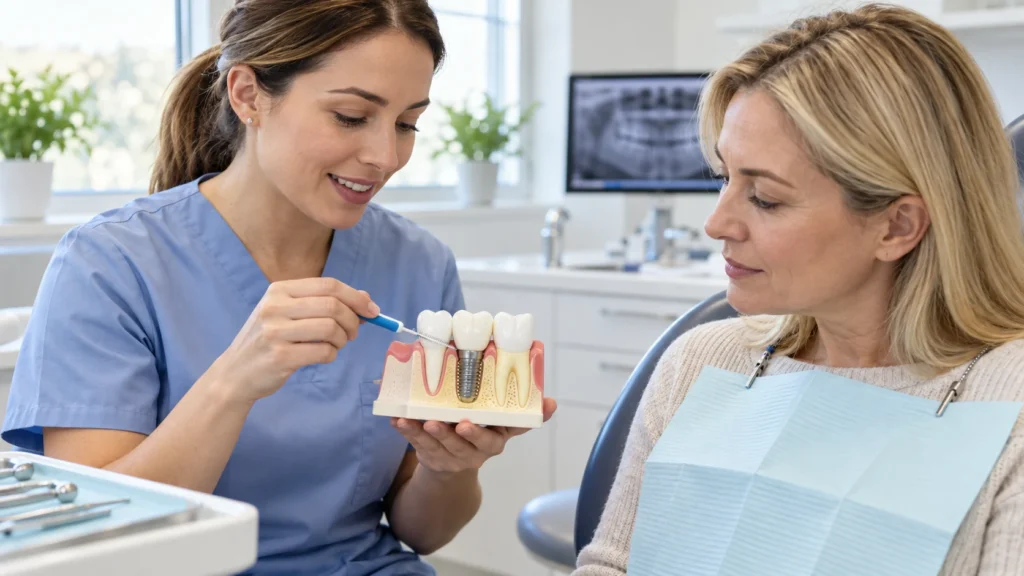
The implant fixture is placed in the jaw and, during healing, may integrate with the surrounding bone. An abutment connects it to a crown, bridge or denture. Implant maintenance therefore concerns both the artificial tooth and the tissues around the fixture. A crown can remain intact while inflammation develops at the gum; a loose screw can cause a problem with the restoration without meaning that the implant has failed.
| Part | Role | Possible reasons for review |
|---|---|---|
| Implant fixture | Provides support within the jawbone | Failure to integrate, inflammation around the implant, loss of supporting bone or a surgical complication |
| Abutment and screw | Connect the fixture to the restoration | Loosening, wear, fracture or replacement needs |
| Crown, bridge or denture | Restores visible form and chewing function | Wear, chipping, fracture, loss of retention or a change in bite |
“Survival” and “success” are not interchangeable. A restoration may remain in use but need repair, and a biological complication may begin before it causes pain. Long-term assessment looks at the whole reconstruction: tissues, implant stability, prosthetic components and the patient’s ability to clean the area.
Research also needs to be read in context. For example, a systematic review of implant-supported ceramic single crowns examines the crown material and reports complications as well as survival during the study periods; it does not establish a lifetime for every implant fixture or every type of restoration. The review is available through PubMed Central. A population result can help explain patterns, but it cannot predict the outcome for one person.
Seven factors that can affect long-term outcomes
- Gum health before treatment. Active gum disease, a history of periodontitis or poor plaque control can raise concern for inflammation around implants. Existing disease should be assessed and, if necessary, managed before implant placement is considered.
- Daily cleaning. Plaque can accumulate around the gumline and prosthetic components. Brushing and cleaning between teeth, including under a bridge where applicable, help limit buildup. Home care complements regular professional maintenance; it does not replace it.
- Smoking and general health. Smoking, poorly controlled diabetes, some medicines and other medical factors may affect healing or complication risk. They do not lead to the same result in every patient, so share a complete medical history with the treating dentist.
- Implant position and prosthetic design. Position, number, spacing and the design of the final teeth influence how forces are transferred and whether the restoration can be cleaned. Adding more implants does not automatically mean a better outcome.
- Bite forces and habits. Clenching, grinding or repeatedly biting hard objects can place extra stress on crowns, screws and other components. The dentist can assess bite contacts and discuss protective measures if they are appropriate.
- Material and maintenance access. Materials, connections and restoration contours can affect wear and how easily the area can be cleaned or repaired. A prosthesis that is difficult for the patient to clean may make daily maintenance less predictable.
- Regular reviews and timely response. Checkups let the clinician assess the gums, restoration, stability and bite. New symptoms should be reported rather than left until the next routine visit.
The European Federation of Periodontology’s clinical guidance treats prevention of peri-implant disease as a continuing process that includes risk-factor control, oral hygiene and supportive care. Its guideline on preventing peri-implant diseases supports a maintenance plan tailored to the patient, rather than a single timetable or lifetime promise for everyone.
Does the crown last as long as the implant?
Not necessarily. The crown takes the direct forces of chewing and may wear, chip, fracture or lose retention. The likelihood depends on the material, tooth position, bite, habits and maintenance. If a crown or screw needs repair, the implant fixture may still be stable. Equally, an intact-looking crown does not prove that the tissue around it is healthy.
Do not try to tighten a screw, glue a crown or alter the restoration yourself. Doing so can damage the connection or complicate repair. If something moves, avoid chewing hard foods on that side and arrange a dental review. Keep any fragments and tell the dentist when you first noticed the change.
How can patients help protect an implant restoration?
Good home care matters, but it needs to suit the restoration and be realistic for your routine. An implant cannot develop tooth decay like natural enamel, but the gum and bone around it can become diseased. Remaining natural teeth still need their own preventive care. Ask your dentist or hygienist to demonstrate how to clean your specific bridge or implant crown, especially the surfaces underneath it.
- Brush twice daily using the technique recommended for your mouth, paying attention to the gumline.
- Use floss, interdental brushes or other tools only in the size and manner advised for your restoration.
- Clean beneath bridges and around abutments carefully; do not force a tool into a space where it does not fit.
- Keep professional maintenance appointments even when the implant feels comfortable.
- Report recurring bleeding, swelling, persistent bad taste, discharge, movement or a new change in how the teeth meet.
- Tell the dental team about smoking, clenching, medicines and changes in your general health.
Art Dent Clinic’s overview of dental implant planning and care describes osseointegration, the assessment of bone and gums, and potential risks in general terms. For broader information about the clinic’s treatment areas, see its English dental-services page. These pages can help you prepare questions, but only a clinical assessment can determine whether a particular treatment is suitable.
Warning signs that deserve attention
Contact a dentist if you notice persistent redness or swelling around an implant, bleeding, discomfort when chewing, discharge, an unpleasant taste, gum recession or a feeling that something is loose. An implant that seems mobile should be assessed promptly. A moving crown may have a different cause, but that distinction cannot be made reliably without an examination.
Depending on the symptoms and history, the dentist may inspect the gum, check the restoration and bite, or take an X-ray to assess the supporting bone. Imaging is selected for a clinical reason; there is no single X-ray schedule that applies to everyone. Bring any previous images or implant records when changing clinics so the new provider can compare the current findings with earlier information.
What happens at a maintenance appointment?
The interval between visits is individual. It may depend on gum-disease history, smoking, cleaning, the type of restoration and how the tissues respond. A review may include the condition of the gum, plaque levels, implant stability, prosthetic wear and bite contacts. Professional cleaning needs instruments appropriate to the implant surfaces and the clinical situation.
If you miss a visit, arrange another rather than waiting for a symptom. If your implant was placed in another city or country, bring the records to the dentist who will provide follow-up. The FDA recommends asking the dental professional for the implant system’s brand and model and keeping that information with your records; see its patient guide to what to know about dental implants.
Warranty language is not a clinical guarantee
“Warranty” may describe commercial terms for replacing a component or providing a service under specified conditions. It does not mean that biological healing or long-term health is guaranteed. Before treatment, ask what the written terms cover, how long they apply, what maintenance is required, which costs are excluded and how a complication would be managed if you live far from the clinic.
Keep copies of the implant system details, restoration materials, treatment plan, invoices and maintenance instructions. If you see a broad promise in advertising, ask for its precise clinical and contractual meaning. No one can state with certainty how long a particular implant will function.
Questions to ask before treatment
- Which parts of the plan are the implant, abutment and definitive restoration?
- Which personal factors could influence healing or maintenance in my case?
- What biological and mechanical complications should I understand?
- How should I clean this particular restoration, and which tools will I need?
- How often do you recommend review, and what will you check?
- What exactly does any written warranty cover, and what is excluded?
- Which records will I receive so a dentist near home can continue my care?
Frequently asked questions
Do dental implants last for life?
That cannot be guaranteed. Many implants function for years, but biological or mechanical problems can occur. Outcomes depend on health, planning, cleaning and ongoing maintenance.
Does the crown last as long as the implant?
Not always. The crown, abutment and implant fixture are different components, and each can need attention at a different time. A crown may wear or chip even when the fixture remains stable.
Can an implant get gum disease if it cannot get a cavity?
Yes. An implant does not decay like a natural tooth, but the tissues around it can become inflamed or lose support. Daily cleaning and professional reviews remain important.
Does smoking always cause implant failure?
No, but smoking can increase healing and complication risks. Tell your dentist and ask how it affects your individual plan rather than assuming the outcome is certain.
How often should I have an implant checked?
There is no universal interval. Your dentist should set it according to your risk profile, gum health and prosthesis. Follow the schedule in your plan and seek advice sooner if symptoms appear.
What should I do if my implant crown moves?
Avoid chewing on it and contact a dentist for an assessment. Movement of a crown does not automatically mean the implant has failed, but leaving it unchecked could lead to further damage.
Conclusion
The lifespan of a dental implant cannot be reduced to a promise that it will last forever. Protecting the restoration means caring for the surrounding tissue, cleaning it correctly, checking the bite and addressing changes early. Art Dent Clinic in Tirana provides information about treatment for local and international patients. If you are considering travel, its dental-treatment planning information for international visitors can help you prepare questions about records and follow-up. To discuss your own case, use the clinic’s quote-request page to ask about an assessment. Request a plan that explains the components, maintenance and any written warranty terms.
