Dental implant maintenance: daily care, checkups and warning signs
Dental implant maintenance: daily care, checkups and warning signs
A dental implant cannot develop tooth decay in the way natural enamel can, but it still needs careful cleaning. The gum and bone around it can become inflamed, while the crown, bridge or denture attached to the implant can collect plaque, loosen or become damaged. A consistent home routine and professional monitoring help protect the tissues and identify changes early. They cannot guarantee that an implant will last for life, and they do not replace an individual dental assessment.
Care is different immediately after surgery and after the implant has healed and received its definitive restoration. Follow your treating clinician’s instructions first, especially if you have had bone grafting or stitches. Once you are cleared for normal cleaning, the right tools depend on whether you have a single crown, a bridge or a removable implant retained denture. This guide explains the principles and the questions to ask at your next appointment.
Why an implant needs ongoing care
An implant replaces a tooth root and supports a restoration. The visible crown may be made from a material that does not decay, but plaque can still collect where the restoration meets the gum. The surrounding soft tissue can develop peri-implant mucositis, an inflammation that may show as redness or bleeding. If inflammation persists and supporting bone is affected, peri-implantitis may develop. Bleeding alone does not prove bone loss, but repeated bleeding, swelling or discharge should be checked.
Early inflammation may cause little or no pain. That is one reason regular professional checks matter: a dentist can assess the tissues, compare measurements over time and decide whether imaging is needed. The European Federation of Periodontology (EFP) describes plaque control, professional care and monitoring as important parts of managing peri-implant disease. Its patient guidance explains peri-implant disease and its treatment.
Right after implant surgery
The first days after implant placement require a different approach from long-term maintenance. Depending on the operation, your dentist may ask you to avoid brushing directly over the surgical site for a short time, use a rinse as directed, eat softer foods or follow other specific precautions. The instructions can differ when stitches, a graft or a temporary restoration are involved. Do not copy a generic online routine if it conflicts with the plan you were given.
Keep the rest of your mouth clean and take medicines only as prescribed. Do not probe the wound, remove stitches yourself or stop a prescribed medicine without speaking to the clinician who provided it. Ask when to begin gentle cleaning next to the site and when your review is due. Guy’s and St Thomas’ NHS guidance gives an example of aftercare following dental implant surgery; the exact protocol for your operation should come from your own clinical team.
Contact the clinic if bleeding does not settle as instructed, pain or swelling is getting worse, you develop a fever, pus, new numbness or feel unwell. Difficulty breathing or swallowing needs urgent medical attention. Do not wait for a routine review when symptoms are severe or rapidly worsening.
A daily cleaning routine after healing
Once your clinician confirms that the area can be cleaned normally, the aim is to remove plaque from the restoration and the gum line without injuring the tissue. A practical routine often includes:
- Brush twice a day with a soft toothbrush and fluoride toothpaste. Angle the bristles gently along the gum line, including where the crown meets the tissue.
- Clean between teeth every day. An appropriately sized interdental brush may help around an implant, but it should pass without being forced.
- Use floss, a floss threader or specialist implant floss if your dentist has shown you how to pass it beneath a bridge or around a prosthesis.
- Rinse with water after meals if food is trapped. Mouthwash may be recommended for a particular reason, but it does not replace brushing and interdental cleaning.
- Clean your tongue and natural teeth too. The implant is one part of a mouth that needs regular care.
An electric toothbrush can be helpful for some people, though it is not essential for everyone. Brush head size, interdental brush diameter and technique depend on the shape of the restoration, access and gum sensitivity. Ask your dentist or hygienist to demonstrate the method in your own mouth. If you cannot reach beneath a bridge or around a back implant, say so; the design may require a different tool or professional advice.
Cleaning depends on the restoration
| Implant restoration | Areas to clean | Ask your clinician about |
|---|---|---|
| Single implant crown | Crown surface, gum margin and the contact spaces beside it. | Interdental brush size, floss technique and cleaning the back of the crown. |
| Implant supported bridge | Bridge surfaces and the space beneath the replacement tooth. | Floss threaders, specialist floss or an interdental brush that fits safely. |
| Removable implant retained denture | The denture outside the mouth, attachment components and gum around each implant. | How to remove it, clean the attachments and whether it should be left out overnight. |
| Fixed full arch restoration | The gum line and accessible underside of the bridge around each supporting implant. | Special cleaning aids and whether the restoration needs professional removal for service. |
If a brush or threader does not slide into place easily, do not push hard. Forcing it can injure the gum or bend the wire. Never try to unscrew a fixed restoration at home. A restoration that moves, clicks, feels suddenly high when biting or traps food repeatedly should be assessed rather than tightened or adjusted yourself. The clinician can check whether the issue is plaque, a loose component, a change in the bite or a damaged restoration.
What happens at maintenance appointments?
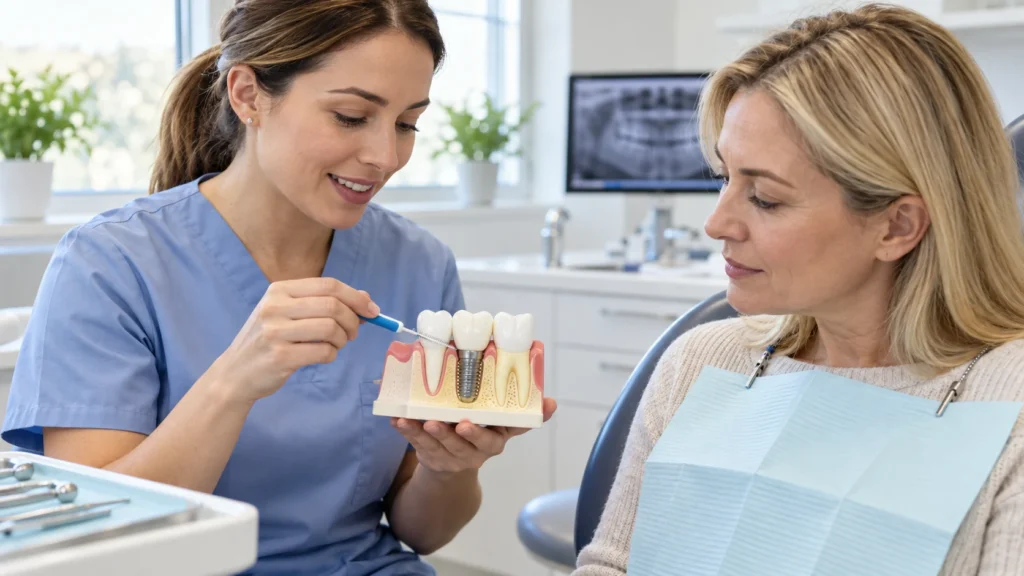
A maintenance visit is more than a quick polish. A dental professional may ask about bleeding, discomfort, smoking, changes in health and how you clean at home. They can inspect the gum for redness, swelling or recession, check for plaque and bleeding, assess the restoration and bite, and compare current findings with earlier records. If there is a clinical reason to investigate bone levels or a hidden component, dental imaging may be considered. X-rays are not automatically needed at every appointment; the decision should answer a clinical question.
The interval between visits is individual. Someone with a history of gum disease, smoking, diabetes that is not well controlled, difficult access for cleaning or previous peri-implant inflammation may need closer monitoring than a person with healthy tissues and an easy-to-clean restoration. Your dentist should set the schedule after reviewing your health and implant history. Bring a list of the tools you use and mention any area you routinely miss. If you are in Tirana and need to arrange a review, you can request an appointment with the clinic.
Art Dent Clinic provides implant treatment and other dental implant services in Tirana. Its broader dental services include care that may be relevant to a patient’s overall oral health. A service page is not a maintenance diagnosis: ask for an examination if you have a symptom, and request an individual plan for cleaning and follow-up.
Changes that deserve a dental review
Contact a dentist if you notice repeated bleeding during cleaning, red or swollen gum, a bad taste, pus, new tenderness, gum recession or a change in how your teeth meet. Also report a crown or bridge that rocks, cracks, feels too high or repeatedly traps food. These signs do not identify the cause by themselves, but they help the clinician decide what examination is needed.
Do not wait for severe pain. Inflammation around an implant can be quiet at first. At the same time, one small bleed after using floss does not automatically mean peri-implantitis. Note when the change began, whether it recurs and whether the restoration feels different. That information is useful during the assessment. If you are travelling or live outside Albania, contact your local dentist promptly for an examination if you cannot return to the clinic soon; ask for your implant and restoration records to support continuity of care.
Factors that can affect implant health
Plaque is a key factor, but it is not the only one. A history of periodontitis, smoking, diabetes, difficulty cleaning under a restoration, irregular maintenance and the design or position of the prosthesis can influence risk. Having a risk factor does not mean an implant is destined to fail. It does mean that prevention, maintenance and honest communication with your dental team are especially useful.
If you smoke, discuss support for stopping or reducing tobacco use. If you have diabetes, share relevant information about its management with your dental team. Do not stop prescribed medicines or start long-term antiseptic rinses, antibiotics or supplements without professional advice. A rinse cannot remove established plaque from a surface that needs mechanical cleaning, and prolonged use of some products can cause unwanted effects.
How to make cleaning easier
Good maintenance depends partly on whether the restoration is accessible. Tell your dentist if you cannot pass a brush beneath a bridge, if the gum bleeds every time you clean or if food packs in the same place. A clinician may adjust your technique, recommend a different tool or assess the restoration’s contour and fit. Do not modify the prosthesis with a file or household tool.
Keep a small kit where you usually brush and, if you travel, pack the specific brush sizes or threaders that work for you. If a tool is discontinued or hard to find, ask for an equivalent size and shape rather than guessing. The ADA’s general oral health guidance supports twice-daily brushing and daily cleaning between teeth; implant-specific tool selection still benefits from advice based on your restoration. See the ADA oral health recommendations.
Frequently asked questions
Do I need a special toothbrush for an implant?
Not necessarily. Many people use a soft manual or electric toothbrush. The important point is to reach the gum line without scrubbing aggressively. Interdental brushes or specialist floss may be useful for spaces beneath a bridge or around a crown. Ask your hygienist to choose a size and show you how to use it.
Can I floss around a dental implant?
Yes, if the flossing method suits the restoration. A bridge may need a threader or thicker implant floss to clean underneath. Avoid snapping floss into the gum. If you are unsure, ask for a demonstration and have the clinician check that the full area is being cleaned.
How often should an implant be professionally cleaned?
There is no single interval for every patient. The schedule depends on gum health, medical history, cleaning access and previous problems. EFP guidance emphasises professional monitoring, but your own clinician should recommend the interval after examination.
Can a dental implant get a cavity?
The implant itself does not develop tooth decay like natural enamel. However, natural teeth can still decay, and the gum and bone around an implant can become diseased. A crown, bridge or connecting component can also chip, loosen or wear and may need repair.
What should I do if the gum around my implant bleeds?
Clean gently and arrange a dental review if bleeding repeats, persists or comes with swelling, tenderness or discharge. Do not stop cleaning altogether, because plaque can worsen inflammation. Avoid using antiseptic products for a long time unless your clinician recommends them.
Do I need an X-ray at every checkup?
No. Imaging should be based on an examination, symptoms, implant history and a clinical question. A dentist may request an image if bone changes or a problem beneath the restoration is suspected, but it is not automatically required at each routine visit.
Can I travel after implant treatment and have follow-up elsewhere?
Travel timing depends on the surgery, your recovery and the clinician’s instructions. Before leaving, ask what symptoms require urgent contact, when the next review is due and how to obtain records describing the implant and restoration. A dentist near home can provide examinations, but coordination with the treating clinic may help when a technical issue arises.
Takeaway
Long-term implant care combines gentle daily plaque removal, tools suited to the restoration and reviews scheduled for your individual risk. Report repeated bleeding, swelling, discharge, discomfort or movement early, even if the implant itself does not hurt. If you need an assessment or want to clarify a maintenance plan in Tirana, you can contact Art Dent Clinic about your treatment questions. A clinician can advise what examination and follow-up are appropriate for your case.
